Overview
The Submarine Groundwater Discharge, Trichodesmium, Iron, and Nitrogen on the Gulf Shelf (STING) project is a U.S. GEOTRACES process study (GApr18) that investigates how submarine groundwater delivers important nutrients to the coastal ecosystems of the West Florida Shelf (WFS). Preliminary studies indicate that groundwater may supply both dissolved organic nitrogen (DON) and iron to this region. In coastal ecosystems like the WFS that have very low nitrate and ammonium concentrations, DON is the main form of nitrogen available to phytoplankton. This study investigates the sources and composition of DON and iron, and their influence on the coastal ecosystem.
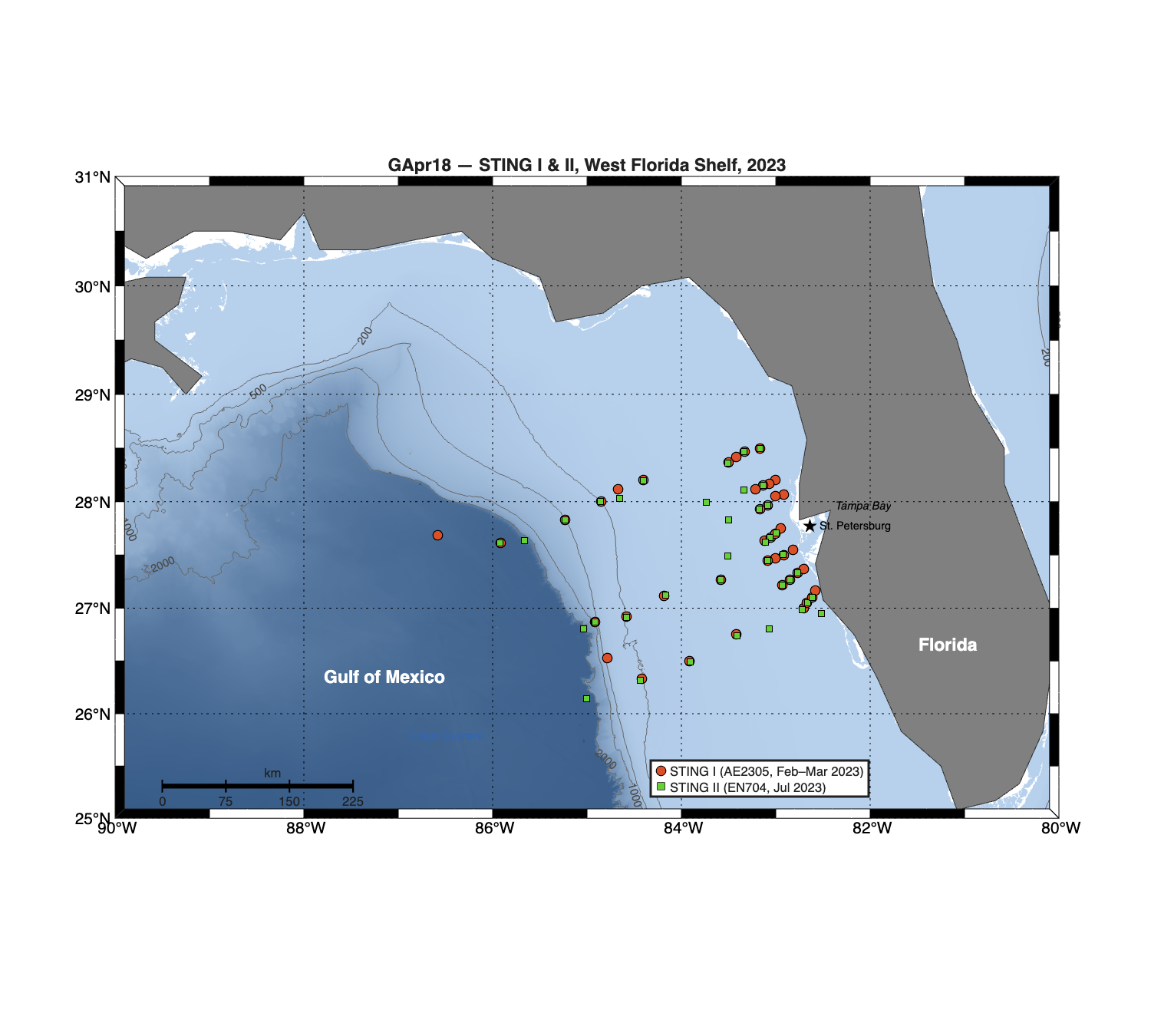
The STING project (GApr18) is a U.S. GEOTRACES process study funded by the U.S. National Science Foundation. The work quantifies the fluxes and isotopic signatures of submarine groundwater discharge (SGD)-derived DON and dissolved iron to the WFS, and evaluates whether SGD stimulates nitrogen fixation by Trichodesmium. The project tests two central hypotheses: (1) SGD is the dominant source of bioavailable DON and dissolved iron on the WFS, and (2) SGD-alleviation of iron stress changes the dominant Trichodesmium species, increases nitrogen fixation rates, and modifies DON and iron composition.
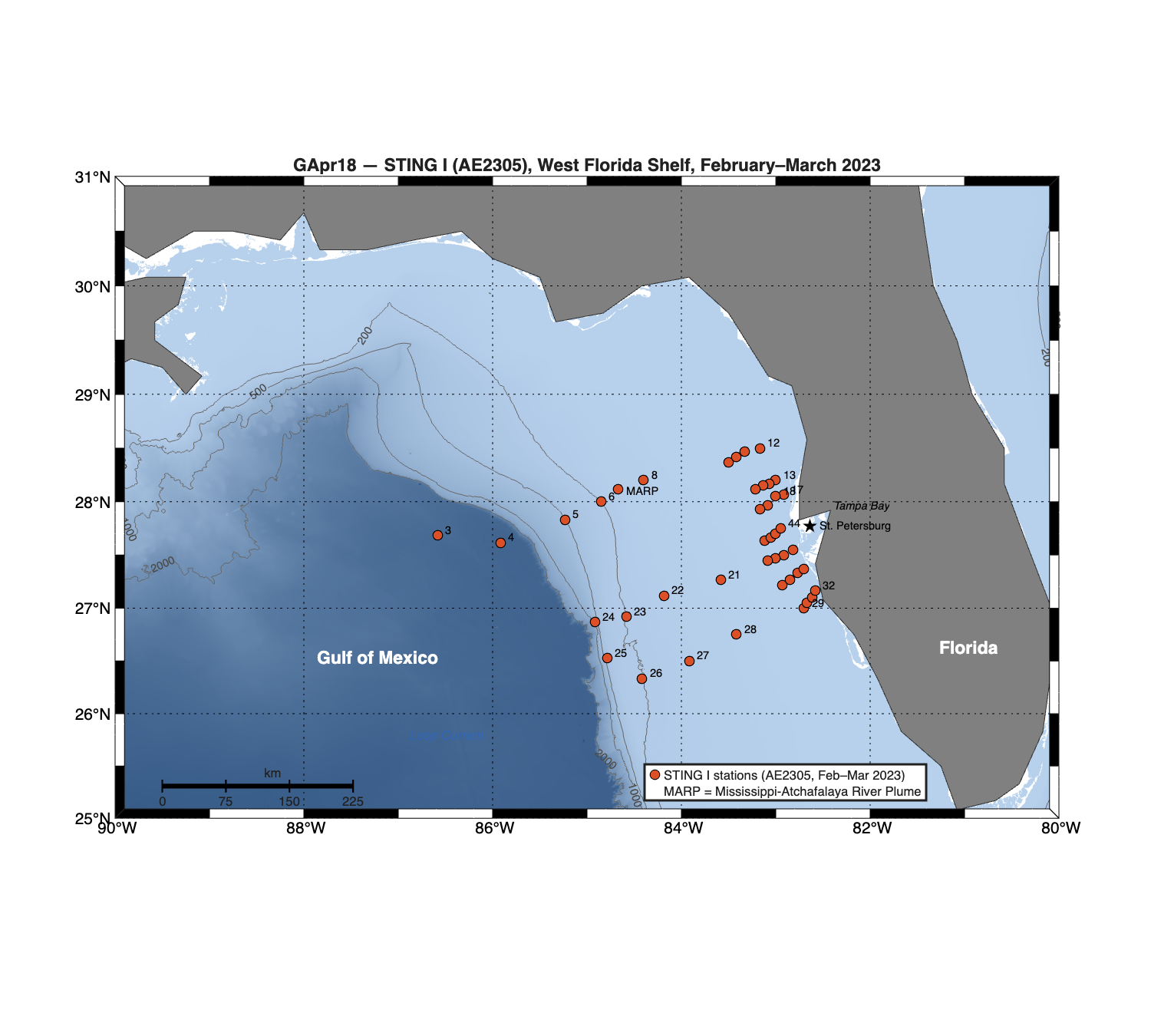
The lead PI and Chief Scientist was Angela Knapp (Texas A&M University), Co-PIs included Rene Boiteau (University of Minnesota), Kristen Buck (Oregon State University), Dreux Chappell (University of South Florida), Tim Conway (University of South Florida), Chris Smith (USGS -St. Petersburg, FL), and Joe Tamborski (Old Dominion University). The first cruise was conducted on the R/V Atlantic Explorer out of St. Petersburg, FL from February 20-March 6, 2023, sampling 44 stations across the WFS. The second cruise was on the R/V Endeavor out of St. Petersburg, FL from July 1–13, 2023, and sampled 43 stations.
Major Findings, last updated May 2026
Initial findings reveal that submarine groundwater discharge (SGD) accounts for a significant component of total dissolved nitrogen and total dissolved phosphorus — primarily in organic form — and more than 95% of the silicate and dissolved iron delivered to the inner shelf. Radium isotopes were used to quantify the seasonal flux of nutrient-rich groundwater entering and leaving the West Florida Shelf, confirming SGD as a major nutrient source to these coastal waters. The study also found extremely high nitrogen fixation rates on the inner shelf, driven by Trichodesmium erythraeum, UCYN-A, and the Richelia/Hemiaulus diatom-diazotroph assemblage, while Trichodesmium thiebautii dominated offshore diazotroph populations.
Cruise Legs
Cruise AE2305 (EXPOCODE: 33H420230220) was conducted aboard the R/V Atlantic Explorer from February 20 – March 6, 2023, out of St. Petersburg, Florida. The cruise sampled 44 stations across the West Florida Shelf, ranging from the 10 m isobath to deep offshore stations (>2,000 m), including targeted sampling of the Mississippi-Atchafalaya River Plume and Loop Current waters.
Samples were collected for dissolved and particulate trace metals, dissolved iron isotopes (δ56Fe), iron-binding ligands, dissolved organic nitrogen (DON) and its isotopic composition (δ15N-DON), Ra isotopes (Ra-223, Ra-224, Ra-226, Ra-228) and Rn-222 for SGD quantification, nitrogen fixation rates, Trichodesmium spp. abundance and expression of iron stress genes, phytoplankton molecular samples (transcriptomics, proteomics, metagenomics), chlorophyll, particulate carbon and nitrogen, and water stable isotopes. Additionally, the Florida Fish and Wildlife Commission sent an Imaging Flow Cytobot on the cruise, which documented a significant bloom of the harmful alga Karenia brevis in nearshore waters.
Science Personnel
Lead PI and Chief Scientist: Angela Knapp, Texas A&M University
Co-PI: Kristen Buck, Oregon State University
Co-PI: Dreux Chappell, University of South Florida
Co-PI: Joe Tamborski, Old Dominion University
Also participating: Eric Webb, University of Southern California
Graduate students and researchers from Florida State University, Oregon State University, University of South Florida, Old Dominion University, University of Southern California, and University of Southern Mississippi.
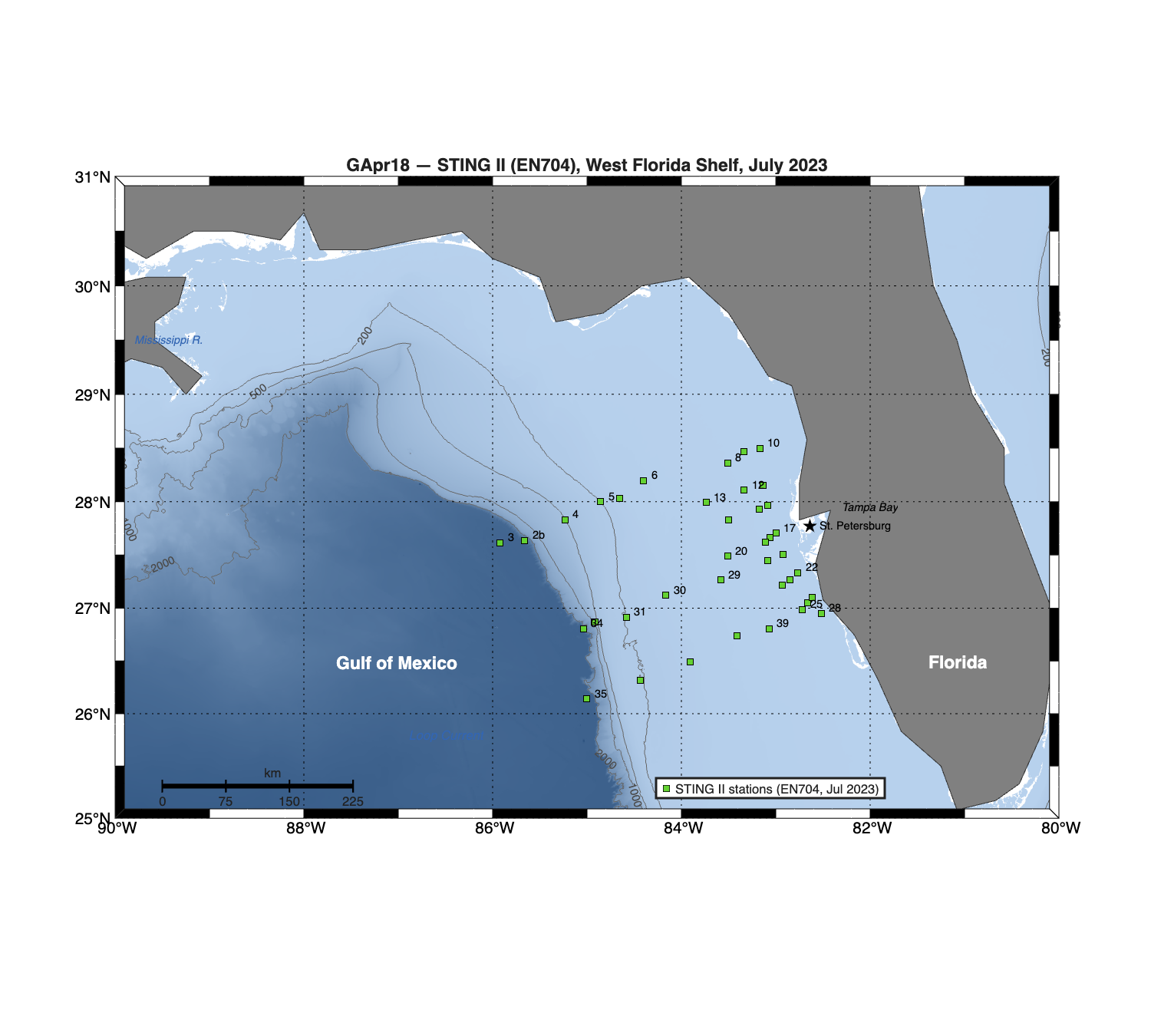
The second cruise (STING II, EN704) was conducted aboard the R/V Endeavor from July 1–13, 2023, out of St. Petersburg, Florida, sampling 43 stations across the West Florida Shelf.
Sample collection on the July cruise followed that described for the Feb/Mar cruise. Sampling occurred during anomalously hot conditions in the Gulf, although biogeochemical patterns were broadly similar, with elevated dissolved organic nutrient and trace metal concentrations and extremely high N₂ fixation rates observed in the nearshore region.
Additional Resources
Project Data Synthesis Workshop, St. Petersburg, FL, February 2025 — participants shared preliminary results and outlined publications. The meeting also allowed the STING project participants to meet with Florida Fish and Wildlife Commission officials, including Dr. Kate Hubbard, and other investigators from USF's College of Marine Sciences, including Profs. Chuanmin Hu and Yonggang Liu, who are studying Karenia brevis dynamics on the WFS, and explore how our work can complement each others' interests to help constrain the sources of nutrients fueling harmful algal blooms on the WFS.

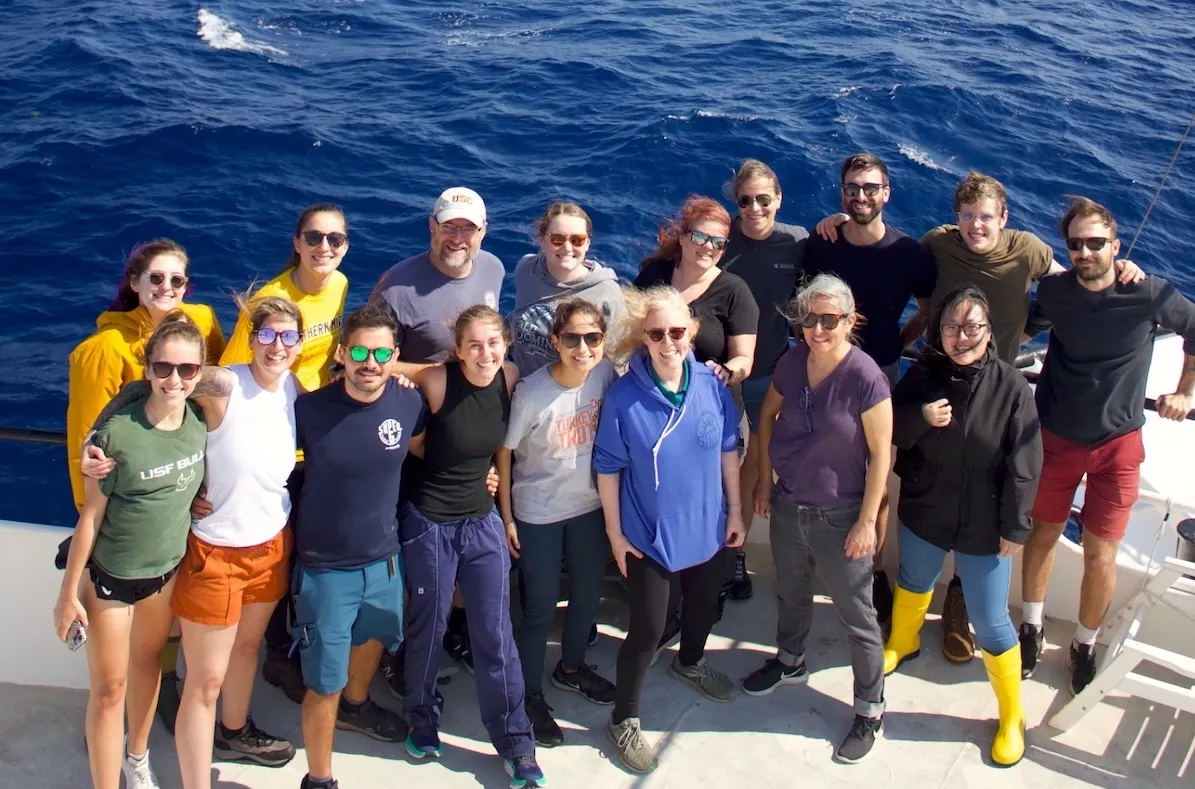
STING project participants at the February 2025 data synthesis workshop, St. Petersburg, FL. Photo: A. Knapp.
Cruise AE2305 (STING I, February–March 2023)
Cruise information and data are archived at the Biological and Chemical Oceanography Data Management Office (BCO-DMO): https://www.bco-dmo.org/deployment/929020
Information and data are archived at the Rolling Deck to Repository (R2R) Program: https://www.rvdata.us/search/cruise/AE2305
Cruise EN704 (STING II, July 2023)
Cruise information and data are archived at the Biological and Chemical Oceanography Data Management Office (BCO-DMO): https://www.bco-dmo.org/deployment/929032
Information and data are archived at the Rolling Deck to Repository (R2R) Program: https://www.rvdata.us/search/cruise/EN704
Project datasets (both cruises): https://www.bco-dmo.org/project/880516
Casciotti, K.L., Marshall, T.A., Fawcett, S.E. and Knapp, A.N., 2024. Advances in understanding the marine nitrogen cycle in the GEOTRACES era. Oceanography, 37(2), pp.85-101. https://doi.org/10.5670/oceanog.2024.406
Confesor, K.A., Selden, C.R., Powell, K.E., Donahue, L.A., Mellett, T., Caprara, S., Knapp, A.N., Buck, K.N. and Chappell, P.D., 2022. Defining the realized niche of the two major clades of trichodesmium: A study on the west florida shelf. Frontiers in Marine Science, 9, p.821655. https://doi.org/10.3389/fmars.2022.821655
Knapp, A.N., Boiteau, R., Buck, K.N., Caprara, S., Chappell, P.D., Confesor, K., Conway, T., Hunt, H., Lindgren, A., Alorda-Kleinglass, A. and Smith, C.G., 2025, August. A multidisciplinary study of the elemental sources and fluxes fueling nitrogen fixation fixation on the oligotrophic West Florida Shelf. American Geophysical Union, 2026 Ocean Sciences Meeting.
Miranda, C., Boiteau, R.M., McKenna, A.M. and Knapp, A.N., 2023. Quantitative and qualitative comparison of marine dissolved organic nitrogen recovery using solid phase extraction. Limnology and Oceanography: Methods, 21(8), pp.467-477. https://doi.org/10.1002/lom3.10558
This research was supported by the U.S. National Science Foundation awards OCE-2148836, OCE-2149091, OCE-2148989, OCE-2148812, OCE-2341997, OCE-2326719, OCE-2422709, and OCE-2506248.
Image Carousel with 6 slides
A carousel is a rotating set of images. Use the previous and next buttons to change the displayed slide
-
Slide 1: Science party of the July 2023 STING cruise on the R/V Endeavor.
-
Slide 2: Science party of the Feb/Mar 2023 STING cruise on the R/V Atlantic Explorer.
-
Slide 3: PI Kristen Buck (OSU) trains students to deploy the trace metal rosette.
-
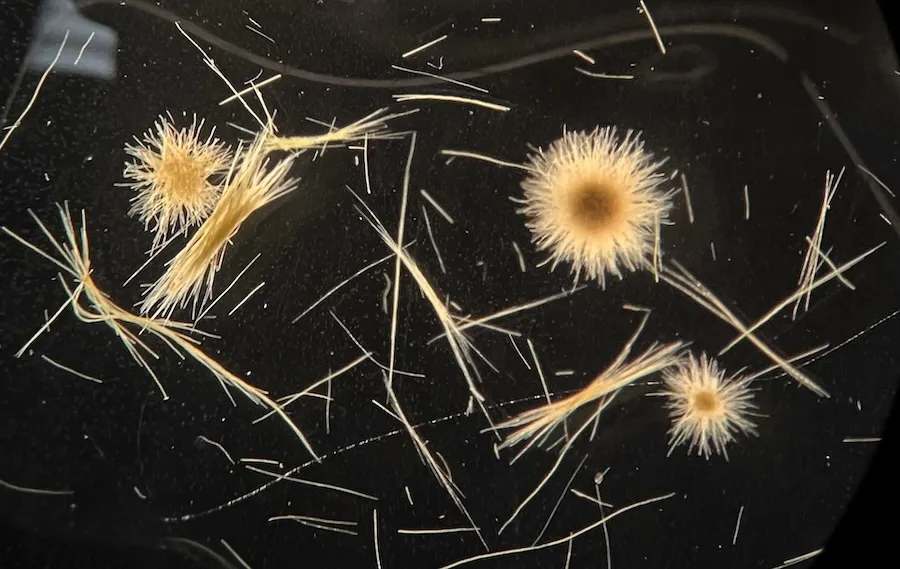
Slide 4: Trichodesmium spp. tufts and puffs collected by net tow on the first STING cruise. Slide prepared by Eric Webb, picture by Angie Knapp.
-
Slide 5: PIs Angie Knapp (TAMU) and Dreux Chappell (USF) retrieve ¹⁵N₂ fixation incubation bottles on the Feb/Mar 2023 STING cruise.
-
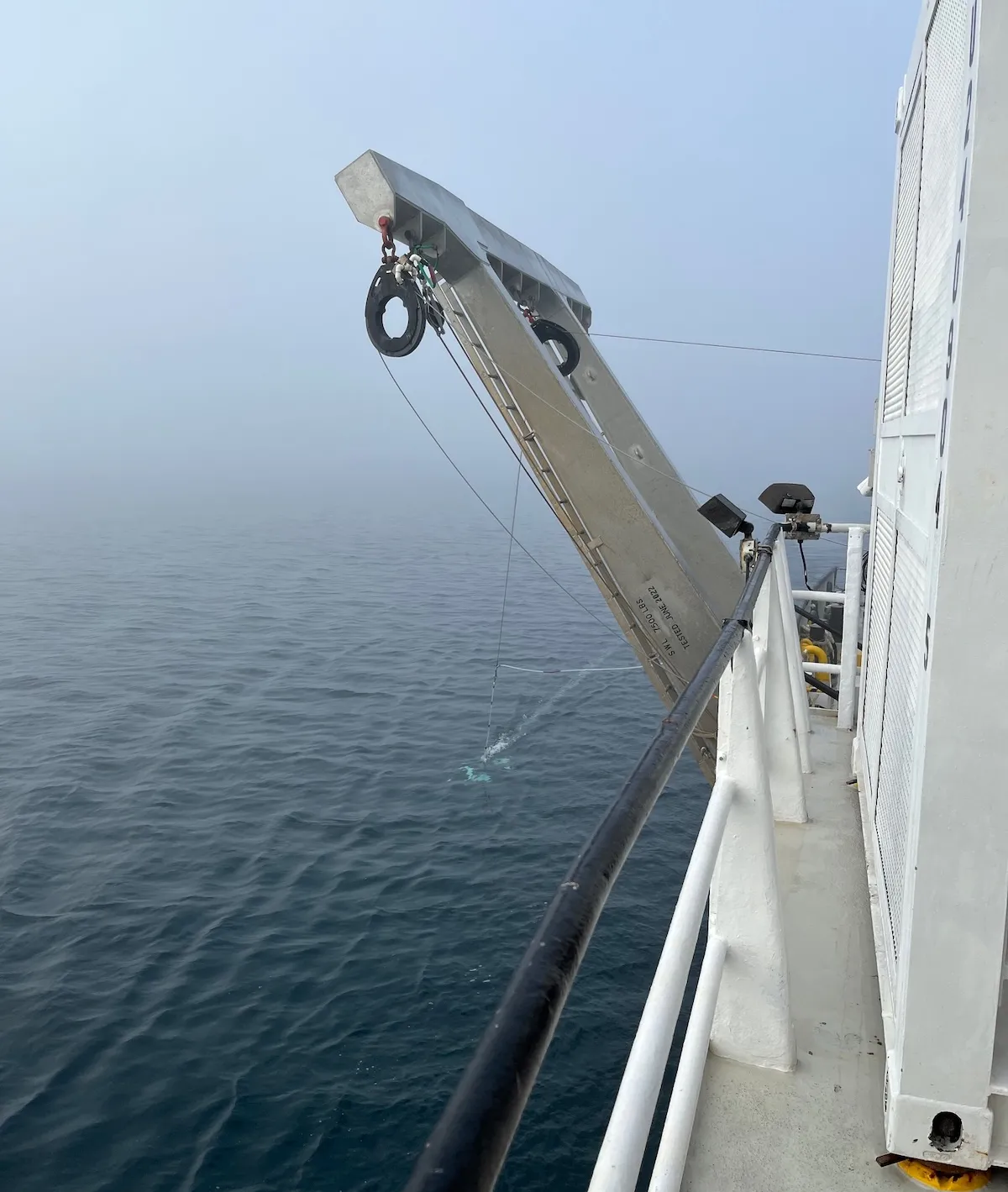
Slide 6: PI Kristen Buck's (OSU) trace metal clean "towfish" collects surface water samples in the Gulf during the Feb/Mar 2023 STING cruise.



All photos: A. Knapp, Texas A&M University, AE2305/EN704 STING cruises.
Funding and Support